Posts

Showing posts with the label Ho8W

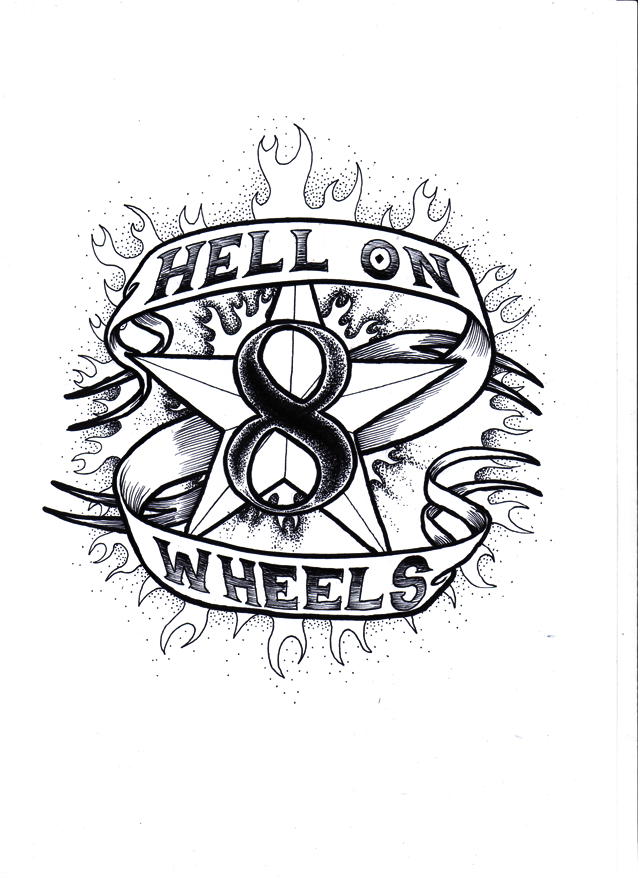
Hell on 8 Wheels back on the Agenda
Image
Regular readers of the blog (and those who are willing to dig through the archives) might be aware of the boardgame I developed based around the awesome sport of roller derby. The game is called Hell on 8 Wheels and plays a bit like a cross between Bloodbowl and Formula D. Good news. We've found a few producers of miniatures who are ready to help us sculpt up some teams for the game, as long as we find the money. So that means we'll be doing some more playtesting before the year is out, and we'll launch a crowdfunding campaign next year (hopefully...along with the Walkabout one). The basic version of the game will consist of two card decks, a board and a series of counters. The advanced versions and stretch goals will include one or more variant teams of skaters for the track. I hope this works out, because there has been a lot of interest in the game.

A cover for "Hell on Eight Wheels"

Image
It's been a while since my last update on the roller derby game, "Hell on Eight Wheels". In my recent creative fury I've come up with a potential cover image for the box.

The mid design slog

My two design projects for this year have gotten to that point where things are locking into place...that has its advantages and disadvantages. Both games ("Hell on Eight Wheels" and "Walkabout") have a good solid framework, they both have some innovative systems (or at least retool existing systems in innovative ways), they work well in my mind, and have gone through a decent number playtest examples and simulations. But now I've reached that point where I just have to focus and get them finished. I really like these two games, I think they've both got some great potential for an entertaining evening (or afternoon...or morning). Its that point where I just have to focus on them and get them right. Both games need to be written up formally in a way that makes sense to someone reading them for the first time. In this regard, Hell on Eight Wheels needs a good series of procedural play instructions (and some solid explanations for play), it has a few of t...

Hell on Eight Wheels: Eighteen - New Board Layout

Image
I've modified the game board to match more closely with the official track layout under the WFTDA. I'm thinking of adding some quick rule tips around the outside (or in the middle), such as the turn sequence for play, the movement details and the blocking sequence. Just enough to make play a bit easier without cluttering up the design too much.

Hell on Eight Wheels: Seventeen - Advanced Rookie Rules

Stage 1.5: Advanced Rookie Rules Additions to the 1.0 rules: -           Skater stress when a skater plays a card higher than their relevant attribute. -           Designation of the Lead Jammer and what this entails. -           Refined Blocking Rules -           Track Markings and the effects these have on movement Play Requirements 1 x Track Board 10 x Skater Markers (5 per player) 20 x Speed Tokens (10 per player) 1 x Activation Marker 10 x Stress Markers 10 x Practice Skater Profile Cards (5 per player) A Standard Deck of Cards Practice Skater Profiles 1. 1 x Jammer Soul: 8, Speed: 8, Strategy: 6, Strength: 6 (Ignore Abilities and Traits) 2. 3 x Blocker Soul: 6, Speed: 6, Strategy: 8, Strength: 8 (Ignore Abilities and Traits) 3. 1 x Pivot Soul: 8, Spee...

Hell on Eight Wheels: Sixteen - Basic Rookie Rules

Stage 1.0: Basic Rookie Rules Play Requirements 1 x Track Board 10 x Skater Markers (5 per player) 20 x Speed Tokens (10 per player) 1 x Activation Marker 10 x Practice Skater Profile Cards (5 per player) A Standard Deck of Cards Practice Skater Profiles 1. 1 x Jammer Soul: 8, Speed: 8, Strategy: 6, Strength: 6 (Ignore Abilities and Traits) 2. 3 x Blocker Soul: 6, Speed: 6, Strategy: 8, Strength: 8 (Ignore Abilities and Traits) 3. 1 x Pivot Soul: 8, Speed: 6, Strategy: 8, Strength: 6 (Ignore Abilities and Traits) Set Up: Team Set Up: Place the five rookie team cards on the team board. Shuffle the card deck, and deal ten cards to each player, then deal a face down card to each team member.  Once all cards have been dealt out, thirty will be on the table or in player’s hands, with twenty-four remaining in the deck. Board Set Up: Each player places their skaters on the designated starting grid markers. A team’s three blockers and p...

Hell on Eight Wheels: Fourteen - Traits

In Magic: the Gathering, most of the creatures traditionally have a single trait defining their race (eg. Elf, Dwarf, Goblin, Merfolk, etc.), some of the more recent sets have creatures bearing two traits, one of which is the race while the other might be an occupation (eg. Elf Farmer, Dwarf Miner, etc). But then there are specific game effects that might target cards based on their name, not just their traits. It’s a simple system, and the forerunner for a lot of similar card systems. I’m actually fonder of the trait system in the Asian inspired card game L5R. I think this will fit better as a template for the trait effects in Ho8W. In this game, all heroes and retainers have a clan (or function as ronin), they have an occupation (samurai, shugenja, courtier, ninja, etc.), and they often have a few more traits that really help define them as individuals (are they an “archer”, a secretive “kolat”, are they “tattooed”, “unique”, a “sailor”, are they tainted by the “shadowlands” ...

Hell on Eight Wheels: Thirteen – Abilities

What is the point of a special ability if it isn’t special? Abilities need to have some kind of significant impact, otherwise players won’t bother using them, and they might just forget to use them. If abilities aren’t used, there isn’t much point including them on the skater’s card. This is especially true when the abilities and traits are the key things that differentiate one skate from another. The core system of the game works on playing cards that are as high as possible, but still under the skaters relevant statistic. A special ability needs to twist this in some way; there is no point creating an ability that states “This skater has +1 strength”, we might as well just increase the skater’s strength by 1. Abilities need to promote some kind of tactic, so they need to be effective in a specific situation or provide some kind of non-statistic advantage (like drawing extra cards). To maintain a degree of balance across the abilities, we need to ensure that the more specifi...

Hell on Eight Wheels: Twelve – Teams

Getting back to work on Ho8W; it’s been a while since I’ve looked at this, so it’s probably good that I start on a completely different part of the rules. I’ve been thinking about the ways in which skaters are differentiated. This seems to be the key method where this game will vary from the other roller derby games on the market, and I really love the idea of personality tension on the track, synergy within the team, and varying ways to play. These are the things that keep a game evolving. Otherwise is becomes like monopoly, you know how the game will play out and the whole thing is basically just a sequence of die rolls, where luck is the only input toward victory. If we can make the skaters different, and give them special abilities that play off one another then we bring another level of strategic play into the bout. This is another place where the “Magic: the Gathering” influence flows into the game. It might also help market the game toward the “Fantasy Sports Leagu...

Hell on Eight Wheels: Eleven - Track Markings

Image
I like the idea of markings on the track to reflect interactions between the skater and the ground. I could have taken the Formula D route (which seems to be the way Impact City Roller Derby is heading), but this makes the turn sequence effect a bit messy. Still, the inside of the track needs to be faster, yet it needs to have more centipetal force pushing the skaters toward the outside of the track. Holding the centre needs a combination of speed and strategy. But if you can hold it, it should provide a great advantage. I described a method of applying values to rack segments in the descriptions for part ten of this development journal...but I'm not sure if I'm happy with it. There are numbers to compare to cards, different coloured numbers that do different things, and generally a few rules that make the game harder for new players to understand (especially those who might not be familiar with the concepts of wargaming). In the spirit of K.I.S.S. (Keep It Simple...

Hell on Eight Wheels: Eight – A Unified Core Rule

Before we go much further, a new blanket rule will be instituted to help pull the various mechanisms into a more unified concept. The highest card wins, as long as it is below the relevant attribute for the action. If two skaters are comparing cards and one skater plays a card higher than their relevant attribute, the other skater wins; but if two cards are played higher than their respective skater’s attributes, the higher card wins. On the negative side, this means I’ll need to reconfigure some of the rules that we’ve looked at so far. On the positive side this mean that once a player understands one part of the game, they’ll have a general understanding of all parts of the game. It also simplifies a few things, and makes them quicker to play through without needing to add figures together to determine results. When we apply this rule to the concept of skater speed and distance moved, the mechanism now changes to… Skaters have “Speed” and “Strategy” attributes, an...

Hell On Eight Wheels: Seven – Targeted Combat

If you’ve been reading through this series of game development blog posts, you’ll have seen many references to Freebooter’s Fate. This is a great miniatures game released by Freebooter Miniature last year. I don’t think it will catch on with the likes of Games Workshop and other bigger companies dominating the market…but I’d love to hope that it gets a good, dedicated fan base. In this game, combat stats are rated on a scale from 1 to 5 while there are six possible hit locations on the body (Head, Torso, Right Arm, Left Arm, Abdomen, Legs). The elegance of the system is the way in which the combat stats mesh with the hit locations…it’s so simple I have to wonder why no one had considered it earlier (maybe it has been used earlier and I’m just not aware of it). When a figure goes into combat they select a number of body locations to assault equal to their attack score, the defender selects a number of body locations to protect equal to their defence score. If the attacker has ...

Hell On Eight Wheels: Six – Skaters Stats

I’ve already decided that I like the idea of cards for this game, they can be played out quickly or held for strategic play forms. I’ve also decided that I’m aiming toward something between the quick abstract combat of Magic the Gathering, the targeted attacks of Freebooter’s Fate and the “cheating” formalised within the rules of Malifaux. I could develop a unique set of cards, perhaps for the creation of customisable decks (like MtG), but this makes the game a bit more esoteric. I want the game to be pretty quick to pick up and play. That leaves me with the standard 52 card deck (13 ranks in 4 suits), malifaux comes up with some interesting effects using a 4-suited deck of this type, but links really strongly into the hertiae of wargaming with an abundance of stats and special abilities for the miniatures. Freebooters fate is a bit more elegant in this regard…I’ll be drawing more cues from there. Four suits ties pretty elegantly with 4 character attributes. I’ve used the c...

Hell On Eight Wheels: Five – Further Movement

Confrontation (2 nd and 3 rd Editons) from Rackham had a quick and easy system for miniatures combat, it combined the location of a victim’s hit with difference between attacker’s strength and victim’s toughness, and combined it all into an elegant solution for how much impact this had after an attack was resolved…all by simultaneously rolling 2 dice and comparing a couple of numbers. Malifaux from Wyrd Miniatures has a system where you randomly draw cards. In certain circumstances a character quirk lets you draw an additional card; if it’s a positive quirk you pick the higher of the two cards drawn for your result, and if it’s a negative quirk you get stuck with the lower of the two cards drawn. This system also allows you to strategically play a card from your hand to gain an advantage during play. I’ve found that card play works more quickly than dice rolling in the various game systems I’ve used, and since I want the strategic element that we see in Malifaux, I’ve alrea...