Stories of Summer

Stories of summer are harder to portray than those of spring. This is generally because the period of rapid growth has reached it's conclusion and now the stories are about the consolidation of power, and the strategic maneuvers that shift power from aggressive and offensive patterns into passive and defensive ones.
For this sort of game, I'd probably look toward the ancillae level for Vampire: the Masquerade. The young neonates are going through their spring phase, trying to become accustomed to their new powers and the political machinations around them. The summer stories kick in once the vampire has made a name for themselves (typically after a couple of decades...because earlier than that, and most of the young fresh-blood neonates will probably die before they've got the chance to influence wider vampiric society). These are the stories where the characters start to have children of their own to take on the risky jobs, and where they start to take a step back from the dangers of the mortal authorities, the werewolves, and anything else that might end their immortality. Once their power consolidates, things then shift to the autumn stories of the elders who are trying to keep their power and maintain their relevance in a world that is rapidly accelerating away from them and leaving them behind. For decades, the whole setting of Vampire: the Masquerade was generally an autumnal one, with the prophecy of everything falling apart as the Antediluvians were threatening to awaken to consume their young and destroy the legacies of millennia.
I'm really tempted to add that this is where the chantry stories of Mage the Ascension and Ars Magica really shine too... but these are two games that I love for their abilities to tell the stories of every season, and it was heavily from these two games that this whole sequence of posts derives. Perhaps if I'm going to point out other games that tend to do summer stories really well, I should be looking at investigative narratives, such (I kind of suggested that narratives featuring the experienced law-keeper Judge Dredd fit that pattern in the previous post). The general rationale here is that the stories are about a stable society that is generally remaining stable through the actions of the characters... there's no real risk of instability at the moment because there are other investigators who can resolve the issues of the world if the protagonists aren't up to it (or don't want to do it), so the motivation of our characters is to make sure they keep doing their jobs and get a bit more comfortabe in their stability with every passing story.
Summer Stories
Reflecting back on the previous post, let's start with Warhammer 40k. One of the most stable factions in that game would be the Orks, who just love a good rough and tumble and a good bit of dakka. The Orks aren't starting a war, they aren't morose over the bloodshed and losses inflicted by carnage. It's something they live for, something they know there will be no shortage of across the galaxy. They live to fight, they fight to live, and if the fighting is good, the living is good. Stories of Orks in this setting are a glorious constant.

A second point for storytelling would be the Star Wars movie "The Phantom Menace" which certainly fits in the paradigm of the investigation story. Even though we know the senate and the whole republic are going to fall, it hasn't happened at this stage, and as far as the characters are aware the setting is stable and they are simply investigating a threat or menace that might be able to be resolved. The whole cycle of autumn with the fall of the jedi, and winter through the underground development of the Rebellion haven't happened, and they don't need to happen for the purposes of this particular story.

The Dark Knight fits the mould of a summer story. Batman has established himself as a force to be reckoned with in Gotham City, and now it's a case of maintaining that stability by working with the police department and Commissioner Gordon. A new threat arrives in the form of the Joker, and other things are happening that need to be dealt with. Gotham city is always in peril due to some lunatic or another, so basically this is status quo for the setting and the character, but it's still his job to investigate, keep the peace and bring justice. The rise is no longer an issue, the cracks in the facade may be starting to appear, but they haven't had a chance to make a dramatic impact yet. The character still has agency, because if they don't make the tough decisions things will go badly...but regardless of the outcome, tough decisions are made.

Arguably, most superhero stories generally tend to be summer stories, unless they are specifically "origin stories" (which fit squarely into the "spring" story category), or the various elements of a dramatic arc which often progress through the decline of autumn, the darkness of winter, then the rebirth or spring, before everything resumes its regular summer course and someone else gets their dramatic arc.
The "slice of life" genre of stories often fits well for summer stories. Tales of this nature don't usually have major ups and downs, they just coast through snippets of daily activities and they aren't (in most cases) dark or dramatic. Things don't necessarily change massively for the better or worse in these tales, they just are. As we meet the characters in various vignettes and scenes, elements may have changed, but on the whole we know who the characters are, we may know familiar locations, and the relationships generally stay the same, it's just quirky little bits and pieces that flesh out the depth of the milieu.
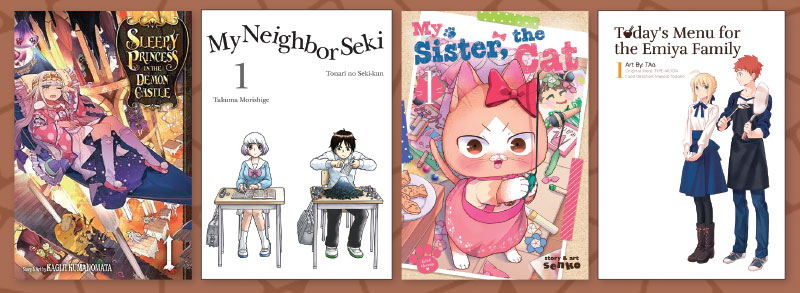
Most sit-coms and episodic television series of the late 20th century also fit into this "slice-of-life" pattern because they were scripted for new viewers to come into the show without needing comprehensive background information, or allow regular viewers to skip an episode or two without there being major shifts in a character that needed explaining. This was generally due to the difficulty of access to episodes if they had been missed, or the inevitable situation where television networks might screen episodes out of order. For TTRPGs this is a valuable tool to pick up when players have irregular schedules, as it means players can simply come back into the narrative with their characters after missing an episode/session or two.

.png)
Comments