Stories of Spring

I've mentioned several times here and elsewhere that there are a lot of things D&D doesn't do well. It struggles with character agency, the swingy die results mean that characters are rarely the heroic individuals that players have in their mind's eyes. Recent versions have really dulled the edge, with characters often surviving situations that should seriously leave them dead. There's not a whole lot in the mechanisms of play that that add mood or drama to the session, and that's left firmly in the hands of the Dungeon Master and players. However, credit where it's due... the overall game framework tells a decent spring story.
The idea of having limited agency in the world, then working through a chronicle, accumulating experience, new skills and abilities, useful toys, and establishing a reputation. All of that works really well for the characters in D&D, especially low to mid level characters (let's say progressing from levels 2-3 through to levels 7-10...which I've often referred to as D&D's "sweet spot"). Beyond this point the excessive hit points of characters start turning D&D combat into a slog, and the range of powers and abilities possessed by the characters often turn each turn into option paralysis. The characters have stabilised and are starting to stagnate. What happens next? Does the campaign fade away? Does it die? Do the players start a new spring story? Do the characters become significant powers in the world while the story moves to new characters? They're all valid options... however, I don't think I've ever seen a successful D&D campaign follow through with the ongoing story of characters as they mature, and begin their fall. It's always the "ever upward" pursuit of becoming a demigod or god, or dying in the attempt.
At the basic level, the "hero's journey" is one of the quintessential spring stories. It's also one of those narrative frameworks that many should be familiar with... it's the structure that many myths follow, it's where Star Wars started its journey back in 1977. Generally, but not always, spring stories tend to be full of hope for a positive future, or at the very least they focus on new beginnings.
For the purposes of this series of posts, I'm going to look at a few general types of setting that reflect the concepts associated with each season, and a couple of specific stories for the season within the context of settings that might epitomise other seasons.
Spring Stories
A typical post apocalypse setting has strong spring themes associated with it. The old world has corrupted, degraded and fallen, that fall might have come to a slow grinding halt, or it might have gone out with a bang. Either way. a period of winter has typically passed, and the stories begin with new heroes in a desolate world who have started the process of building something new. Not everyone wants new structure in the setting, some have made their power through the discord of the dark ages. Similarly, not everyone can agree on what form the new structure should take. It's the tenuousness of new alliances and the unknown of what lies ahead that makes these settings exciting. "Mad Max: Fury Road" has a variety of symbolism alluding to the spring, but most blatant is probably the shown through the seeds of the vuvulini elder, and the return to the green place to see the growth of new plants. It's about setting the seeds for something, creating a catalyst turning point in the world for positivity to return.

A colonial setting makes an interesting contrast between something new and something old. The colonists are struggling to create a new life, and find stability in the face of an overwhelming chaos around them. Meanwhile, the first people find that their setting is in an autumn, gradually being eaten and destroyed in order to fertilise the growth of the colonists.
A specific spring story within a stagnant summer setting could be found in the movie Dredd (2012). Judge Dredd is at the prime of his career, and some have argued that this is not actually his movie. He remains a constant, much like the massive Megacity One that sprawls around the building where the narrative unfolds. The spring story here is the tale of Judge Anderson, who has everything to prove, everything to gain, and shows over the course of the movie that she can move from being a rookie to a worthy member of law enforcement in the city. In Anderson's narrative, the beats of the hero's journey can basically be plotted, and since this is a more well known structure, it makes her story easier to identify.

Any coming of age story can be considered a spring story. So with that in mind, most young teen television shows immediately fall into this category. I don't watch a lot of these, but generally the idea of navigating a high school environment, and coming to grips with what it means to be an adult in the real world (or an imagined fantasy world) fits the pattern that we're after.

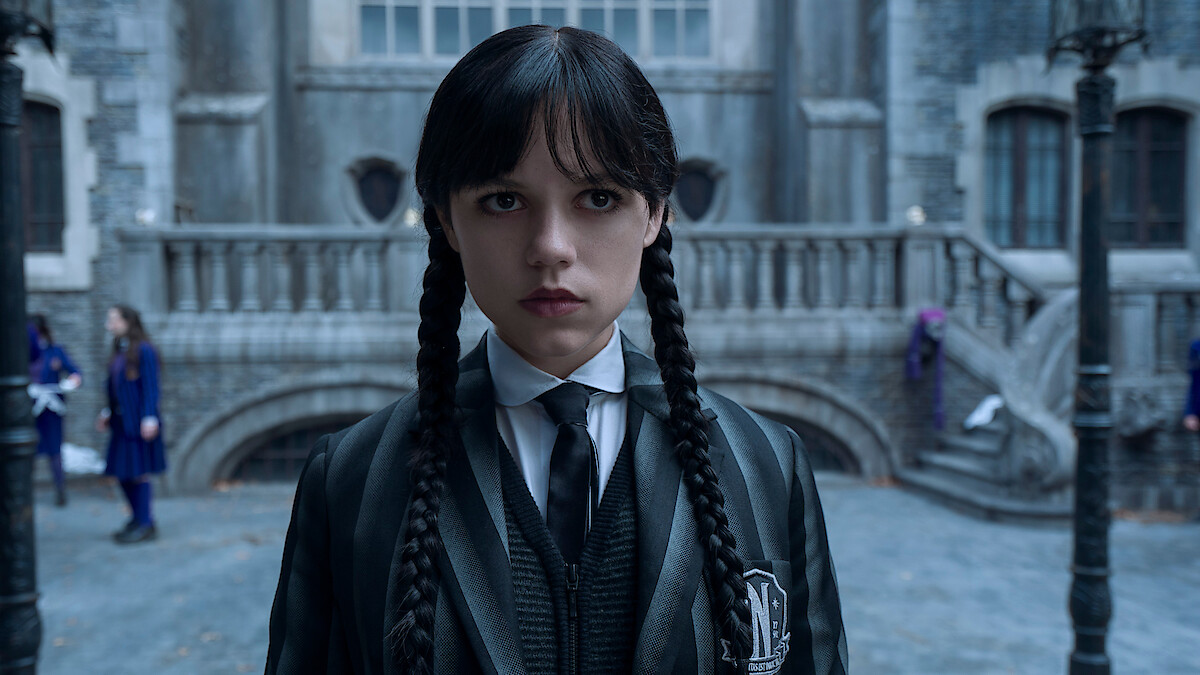
Ironically, I guess Wednesday, for all it's darkness and kookiness, also counts as a spring narrative in this context.
On much grander scales, we can look at vast settings where different factions identify according to the spring themes in comparison to everything happening around them. I've had in mind the Warhammer 40k setting, and for this environment, each of the factions can be tracked according to the rise and fall of their civilisations. The Aeldari fell millennia ago, and are in the final stages of Autumn, and the Empire of Man has been stagnant for millennia (and is either clinging to summer or also falling to Autumn), but there is the Tau Empire who have only risen in recent centuries and are still hopeful for their expansion across the galaxy. Their feeling as a faction is new and energetic, rather than the bureaucratic and gothic, of the decadent and decaying of other groups. This vibe puts a lot of players against the Tau, because if feels like a thematic disconnect with the other groups, but it's this contrast that I feel makes them really interesting. The Leagues of Votann ("Space dwarves") also have this progressive and technological feel to them.

When it comes to superhero movies, my favourite trilogy goes through a spring picture, a summer picture, and an autumn picture. This of course being the Dark Knight trilogy by Christopher Nolan. Batman Begins certainly fulfils the criteria of a spring movie, where the progatonist starts in a life of chaos and darkness, before taking control of their life and becoming a protector and vindicator to a corrupt and decadent city. (Yeah we've got parallels to Dredd here). For the spring story, he gathers his tools, he acquires his allies and he establishes his modus operandi. He has demons, he acknowledges those demons, he utilises them, and gradually transcends them. It's about understanding who you are and learning your place in the world and how you can make that position something worthwhile to the community and the people who need you (even if they don't realise this is the case). I could probably go through a lot of the same points with the Iron Man trilogy of movies, but Batman is my guy. (You know I'll be coming back to this trilogy in other parts of this series.)
:max_bytes(150000):strip_icc()/batman-begins-2000-c9055c658a474edc8450c8fd8da33e58.jpg)
There are plenty of other spring stories. Their uplifting narratives of overcoming adversity and self empowerment make them popular with Hollywood, and have generally kept them as a staple narrative for as long as we've been telling stories. The idea that someone can transcend the chaos or darkness around them to gain agency in the world is a powerful idea that resonates with many of our escapist tendencies.
.png)

Comments